Treatments · Implants
Dental
implants.
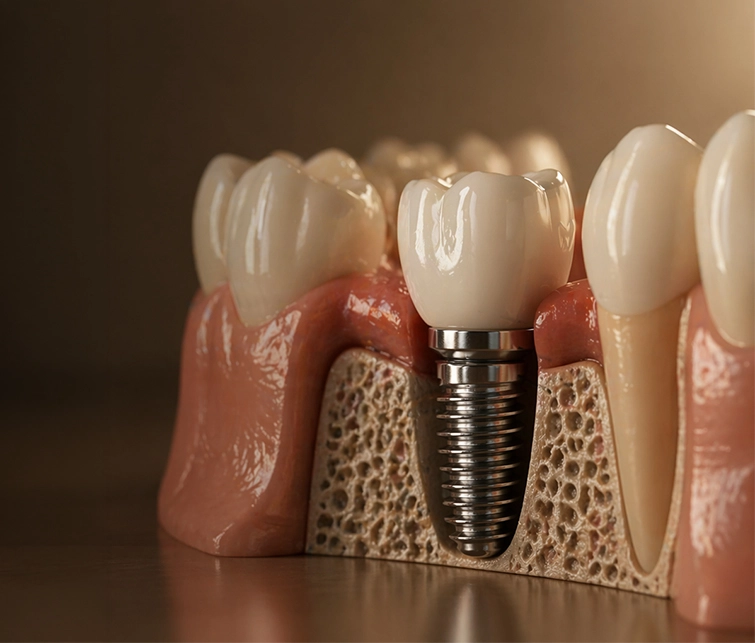
A titanium root placed in the jawbone to replace a missing tooth, with a permanent tooth on top. Measured with CBCT and planned around your bone.
What it does
It replaces a missing tooth without touching the neighbouring teeth. Planned correctly, you chew, speak and smile with it like your own tooth for years.
It works for a single missing tooth, several missing teeth or a fully toothless jaw. Your bone structure decides whether you're a candidate, and we see that with CBCT at the exam.
Who it's for
Does one of these sound familiar?
- One or more teeth are missing
- Your removable denture bothers you
- You don't want healthy teeth cut for a bridge
- You can't chew on one side
- You have a tooth that can't be saved
- You're self-conscious about the gap when you smile
Process
Implants step by step.
Usually 5–7 sessions in total. Timing depends on your bone and healing.
Exam and CBCT scan
We see the height and width of the bone and its distance to the nerves in 3D.
1 sessionPlacement
The implant is placed in the bone under local anaesthesia. You won't feel pain during the procedure.
1 sessionHealing
We wait for the implant to fuse with the bone. Meanwhile you carry on with daily life using a temporary solution.
Check-up visitsPermanent tooth
An impression is taken and your custom-made tooth is fixed onto the implant.
2–3 sessionsClinical case
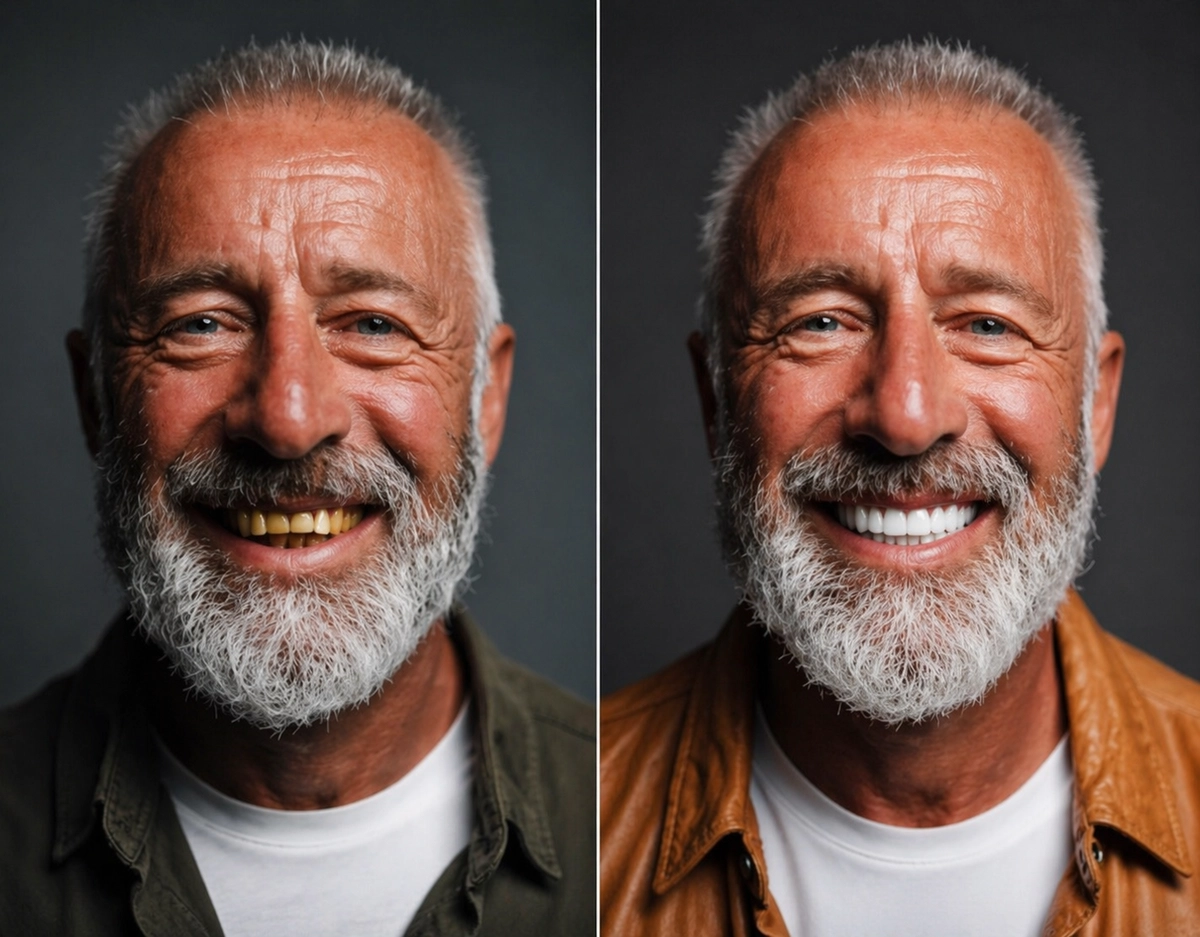
Real cases from our clinic.
Shared with the patient's permission. Results vary from person to person.
FAQ
Implants FAQ
Will I feel pain when the implant is placed?
The procedure is done under local anaesthesia, so you won't feel pain. There may be mild sensitivity for a few days afterwards, and we explain what to do in advance.
Can everyone have implants?
Most adults can, but bone volume and general health matter. If there isn't enough bone, extra procedures may be needed. We give a definite answer after the exam and CBCT.
How long do implants last?
Well-planned, regularly maintained implants last for many years. Oral hygiene and check-ups directly affect their lifespan.
I smoke. Is that a problem?
Smoking slows healing and increases risk. We recommend quitting or cutting down during treatment, and we assess your situation together at the exam.